A opportunity may open up, to work on how how a collection of environmental groups consider environmental equity as integral to their practice. This post is some early thinking about how to address this opportunity.
The context. The groups are part of a not-for-profit collective organized to advance climate-change initiatives in Evanston. Groups run their own programs focused on different areas: energy, waste, local food, natural habitat and transportation. One group also focuses on environmental justice, but this group is in transition (see Legacies and transitions). And so: The need to recast how equity work continues as part of the collective’s programming and advocacy efforts.
I attended a recent meeting where the collective’s group leaders (all volunteers) and some group members came together to discuss collaboration. This is an old story: Siloed organizations doing good, expert work on their own looking for ways to do more, or do better, by working together. It was after this meeting that I started to think more about how equity might be integrated into each group’s thinking, rather than relying on a formal program to “be the voice” of environmental equity and justice. That led to an email exchange about that option, and the potential opportunity to assist in addressing the issue.
A few things jump out at me.
It’s clear the collective first needs to learn how to collaborate to create cross-group solutions that actually work. Folks often underestimate this challenge. It’s the “that actually work” part that’s hard, and it is new territory for the collective. I heard one opportunity at the meeting that struck me as having good potential for a first effort. Several groups do on-site visits (mostly homes) to consult on efforts to go more green. One group member asked: How might we leverage these visits to benefit all groups? My spidey-sense tells me that this is a right-sized kind of challenge. It’s very specific, clear, and potential solution experiments could be considered and designed in a single working session of 1-2 hours.
It also jumped out at me that equity cuts across groups and may be – should be – the kind of thing that drives cross-group collaboration. But equity is a big, complex topic. Better to work on a small win (how might we leverage home visits to benefit all groups?) and build the collaboration muscle before taking on a more challenging topic.
The third bit that jumps out at me is my own, developing understanding of environmental justice and equity. I’m very new to this and am aware of being a novice. I’m coming at it by applying my expertise in designing for learning through community, a way of looking at most things as a learning challenge that is best approached when you engage a group of folks collaboratively learning and co-creating.
So when I step back and look at how I am thinking about environmental equity, I realize that what I am really doing (by habit) is thinking about how I might teach it.
“How I teach it” begins by framing a challenge in such a way as to invite a group of learners into inquiry – an exploration of a complex problem that then leads to their co-creating multiple, different solution experiments.
The framing that I currently have comes primarily from listening and learning from the team at Environmental Justice Evanston, and attending workshops conducted as part of Evanston’s Environmental Equity Investigation. It’s also informed by a lot of what I’ve been writing here, including What if everybody’s job is to do repair?
I would frame environmental equity as a challenge consisting of two types of work:
- Repair work: Intentional re-investment to repair the damage created by historical discrimination and disinvestment.
- Inclusion work: Ensuring design of new programs (and resulting opportunities) attend to the needs and desires of communities affected by historical discrimination and disinvestment.
I wanted to make a clear distinction between repair work and inclusion work, even though the two are clearly related. Repair work means intentionally altering the balance of investment. Let’s say we have a program to maintain and increase the city’s tree canopy and other plant life that contributes positively to climate change issues. How might we intentionally alter the balance of resources applied to that program so that more goes toward communities affected by our history of discriminatory housing practices?
To do that repair work well means we also need to do the inclusion work effectively. It means doing the hard work to understand the unique needs and desires of the target communities.
Otherwise we are designing for, not with. We risk imposing solutions on communities that are ineffective, or worse, repeat our history of damaging the bonds that make a community a community. Not that that has ever happened before.
How might this framing work in an effort to help the collective of environmental groups integrate equity into their own practice?
By using it as the basis for the collective to conduct its own inquiry, design testable experiments, and learn from the results of the experiments. I might also think about adding a routine where expert voices – folks with environmental justice or civil rights and community expertise – critique the collective’s thinking, assumptions and interpretation of experiment results.
The point is to facilitate a learning journey where the collective finds its own path to discover effective practices and to develop and internalize what “equity” means.
Here’s how this all might play out if I were asked to start today.
First, I would ask for feedback on my framing from the leaders of Environmental Justice Evanston. I’m pretty confident it’s workable but would want to validate my assumption. Let’s assume that it’s workable.
Next would be facilitating a session with the collective to help them develop their own meaning of the framing and to start identifying potential opportunities to work on.
- What does repair work mean, for us? What does inclusion work mean?
- Based on our shared understanding of these two types of work, what problems do we need to solve (as a collective) to begin addressing them? (These are opportunities for solution experiments).
- Have we had any successes in these areas in the past? What exactly did we do? Why do we think it worked? Is there something to retain from this experience, to build off of?
At this point the group needs to make a decision. Do we work on one opportunity to design solution experiments, or do we split into small groups to cover more than one? It’s not necessary to cover all the opportunities. This decision is more about allowing the group to move in whatever direction for which it has energy.
Next would be a little homework (what do we need to know to help us think more effectively about designing solutions?). This would be a time-boxed activity where the group might share resources with each other.
The next step would be another facilitated session to do quick-and-dirty solution experiment development. The point of this is to show the collective a process it might use to quickly develop testable experiments. Once folks get the hang of this, it’s easy to repeat.
There are a lot of ways to get to a quick-and-dirty solution experiment design. The key points, however, are:
- Generating lots of potential ideas through inclusive brainstorming (cycles of individual and group idea generation).
- Making a “good enough” decision on which idea to pursue.
- Ending with a clear, doable experiment, a commitment to perform it, and a specific way to assess results.
The idea behind this structure is to help the collective develop a learning routine which can be repeated to keep hacking away at the equity issue. Maybe it’s done repeatedly as a whole collective. Maybe a subgroup takes on a piece of the work for a period of time, and then another subgroup follows.
But in my experience, not much really happens without the learning.
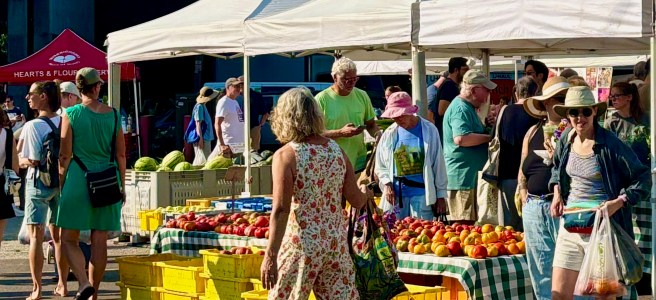
The photographs which accompany these posts are taken by me, and show different settings and views of Evanston (where I live). It is a visual reminder that this is the most important setting for belonging and contributing to community: our neighborhoods, our cities.
 Jeff Merrell
One thought on “Notepad: Thinking through how to teach environmental equity”
Comments are closed.