In the next two weeks I have the opportunity to participate in a few community listening events. I’ve been thinking about what I want to pay attention to. Three things jump out:
- How are the sessions designed to actively listen? And did the design reasonably facilitate that desired goal?
- How do organizers acknowledge participant work effort – the effort to provide feedback, data, stories, etc.? What values might this acknowledgment appeal to?
- Where are the opportunities to supplement listening events with continuous listening?
I dive into the first two themes (and more) in Unpacking a (mostly) positive community listening experience. The third is from my work at Northwestern University with Teresa Torres.
The upcoming events come as a result of my reaching out broadly to Evanston folks and asking about groups that are interested in community listening and who may be open to my volunteering to assist in those efforts.
I define community listening as:
- How a group listens to the community members it serves.
- How a group makes sense of what it is hearing from community members.
- How community members move from only sharing ideas and opinions to co-creating potential solutions.
A key moment came when I was invited to a meeting of Environmental Justice Evanston (EJE). It’s a small group (6 people). But each member brings incredible credentials: Deep expertise and experience in urban environment, civil rights, community health, law, public administration and local activism.
Their individual accomplishments and credentials were striking as I began to know them. But what really stood out is how the group had coalesced around their mission of promoting environmental equity. It’s a very systems-level view of all the things that contribute to healthy urban lives: The neighborhood environment, streets and transportation, housing, open spaces and parks, and access to healthy foods, healthcare and community services.
In Evanston the inequity is clear as you map these elements across neighborhoods. And not surprisingly, the inequity is most pronounced in predominantly Black neighborhoods created as a legacy of red-lining housing practices.
EJE’s efforts are focused on increasing the number of mitigations put in place to resolve these known inequities. In their past work, they have organized and facilitated community listening sessions. The group has great experience doing these and expert-level understanding of how to tease out real lived experiences from folks. Yet, they were also open to looking at ways to improve these practices. My on-going role is to help work on those improvements.
The upcoming community listening activities in the next two weeks include a public workshop on environmental equity led by consultants working for the City of Evanston. Another is a public-transportation listening event led by Chicago Metropolitan Agency for Planning (a regional planning organization). I am also joining EJE in a meeting with a city official. And finally, I am participating in a condo association session dedicated to property and personal safety, led by a member of the Evanston Police Department.
Two of the activities are explicitly framed as “listening” events. The others are set up as information sharing and relationship building. But each is an opportunity for organizations to better understand the lived experience of community members.
And each is a designed activity. Choices are made in how to allocate time, who is engaged, and how. I am sure there will be a number of opportunities that emerge to improve the practice of community listening.
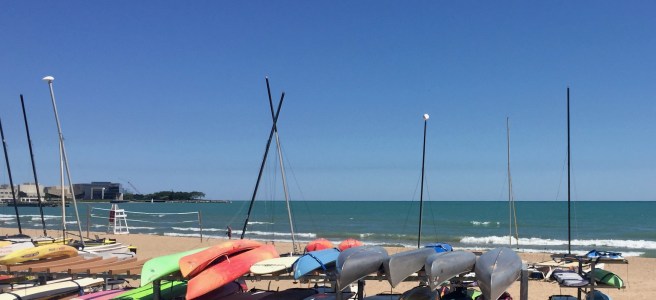
The photographs which accompany these posts are taken by me, and show different settings and views of Evanston (where I live). It is a visual reminder that this is the most important setting for belonging and contributing to community: our neighborhoods, our cities.
 Jeff Merrell